
Just don't look
Ruth and Boaz - advocacy and hunger
Links to other sermon notes on food and hunger
How would you react in this situation?
“My American Airlines flight was packed. Passengers from a cancelled United Airlines flight had switched to American at the last minute. The pilot addressed us on the intercom: "We're glad we had enough seats for our friends from United. Unfortunately, we don't have enough meals. When the flight attendants come by, tell them if you're 'American,' in which case you get dinner, or 'United,' in which case you will get a soda." At first I was relieved. I was an 'American passenger.' I would get supper. Then I thought of my seatmates. Would I share my food with them if they were 'United?' I was relieved when my seatmates told the attendant they were also 'American.' But then I started wondering if the people in the seats right behind me got food, and the people behind them. Should I share my food with them? If I started sharing, where would I stop? I didn't turn around to check. As long as I didn't see them, I was able to eat. I face the temptation "to not look" at the hungry and homeless people in the world. But I know looking away makes me more calloused, and a bit less human. Gaining awareness of those with too little –better yet, sharing a meal with them—makes me more human.”
— Dave Schrock-Shenk in Trek: venture into a world of enough, published by Herald Press, 2002. Posted on The World at the Table, from the Christian Reformed World Relief Committee website. http://www.crwrc.org/pages/crwrc_whresources.cfm
Click here for a printer friendly PDF version
PassageRuth 2:11-3:5
Introduction
Most teachings on the book of Ruth focus on the theme of redemption. There is also something of critical importance to learn from this story for those interested in advocating for people affected by hunger, poverty and injustice. These notes are meant to frame the story with the goal of encouraging people to speak out on the issue of hunger and injustice. There are key examples in the story of how people manoeuvre, negotiate, and strategize in a way that includes love, hope and justice. The backdrop is significant: God provides, employing people in this cause in various ways.
Focus or Theme
Advocacy is accomplished with the attributes of patience, diligence, resourcefulness, truthfulness, hope, and love. Ruth does not wait around for someone to help her – she takes action, but gets a “hand up” at key moments.
Context
Famine in the land forces Naomi, her husband Elimelech and their two sons to leave Bethlehem and travel to the country of Moab as refugees. (Famine is an issue that still has currency for us – East Africa for example). While there Elimelech dies leaving Naomi with her two sons who marry Moabite women. Ten years later Naomi’s sons die, leaving no heirs and the three women alone to provide for themselves. The loss of a male protector to provide them with the fundamentals for life - food, shelter, safety from attack (rape) etc, leads Naomi to return to Bethlehem. Her daughter-in-law Ruth chooses to go with her, becoming a foreigner in her late husband’s homeland. Perhaps some of the best know verses of Ruth are found in 1:15-18 – they speak to Ruth’s faithfulness to her mother-in-law. The verses highlighted in this study show Ruth’s initiative in seeking to provide for both herself and her mother-in-law by offering to glean along the edges of the fields during the barley harvest, a right which was protected by Jewish Law. But there would have been risks for her which are referred to in Boaz’s efforts to protect her and honour her courage and loyalty.
Key Message for Advocacy Theme
In Eugene Peterson’s introduction to the book of Ruth in The Message, he points out that throughout Israel’s history there have been heroes and events that look so impressive that it can become a stumbling block for the average person to see him or herself in the divine workings of God. But here God chooses exactly that kind of person in this kind of “non-event” to fulfill the great purpose of history: Ruth is the key to the Davidic line, as it turns out, which brings about salvation to humanity. It’s a classic move by God – to choose a pagan, an outsider, to redeem Israel. In other words, God chooses all of us to work at this story of redemption in very practical ways – such as using the conventions we find in our societies toward the goal of satisfying the hungry and finding justice for the outsider.
But how?
Ruth’s actions demonstrate the kinds of attributes God seeks in relationship. Those who advocate on behalf of those adversely affected by hunger and poverty can take note of these:
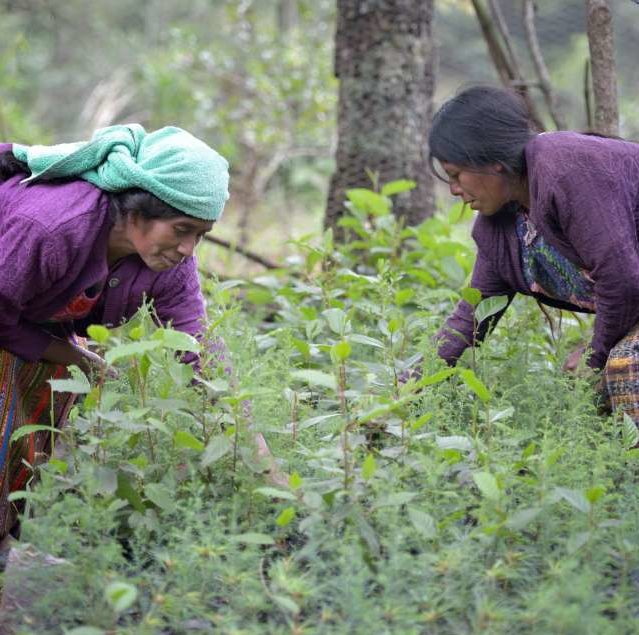
Patience & Diligence – it is not our timetable, but God’s. We find ways to take advantage of the key moments in life to act, as Ruth and Naomi and Boaz did, but there are times when things take time, which is why Ruth returned regularly to the fields and carried on with her work.
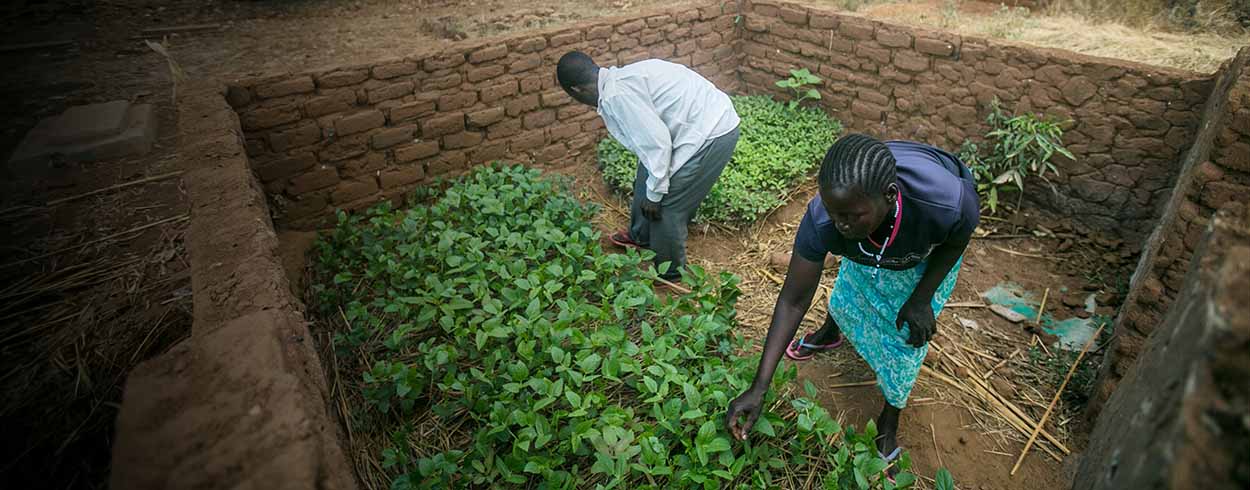
Resourcefulness – as women in a society in which they have little power both Ruth and Naomi use the tools they have to help secure their future. Ruth takes the initiative to go out into the field and glean barley to provide their daily bread. Meanwhile Naomi recognizes Boaz as a relative who may provide them with security for their future and she instructs Ruth in order to make her hopes come to fruition. We find such resourcefulness in our partners around the world who scrape a living from the dusty earth and build shelters using little materials.
Respect – Ruth showed respect for the rules and conventions that governed life in this new land. While there are times when advocates need to speak up more boldly, we are, for the most part, working at change from within, with good people in powerful places of decision-making, who need to hear the voice of justice. She also needed the help of an advocate (Boaz) to secure a home, food security, etc, and she found that and so much more in Boaz.
Truthfulness – Boaz did not seek to “trick” anyone, although he certainly strategized. His actions were sound and his message was clear. He spoke truthfully to his neighbour and community. Our own message needs to contain “truth”, which requires us to look deeply into matters and to go beyond the emotional response.
Faithfulness – This story would have a much different ending if Ruth had chosen to return to her family. Naomi returns to Bethlehem empty, having lost both husband and sons, but through the faithfulness of Ruth, her industrious ways and her commitment to her mother-in-law, Naomi is full at the end of the story – having been fed in body and spirit - with the barley and having been provided with an heir through Ruth’s union with Boaz. In addition, Boaz through his action at the city gate and his words to Ruth states his intention to marry her although this was not required of him. He chooses to make their first child the heir of Ruth’s dead husband – something which is not required because he is not the dead man’s brother.
Key images
Ruth and Boaz dining together – two people sharing bread who come from two different worlds, brought together by love and loss; famine and plenty, rich and poor together creating hope for a better world; people in conversation.
Key terms
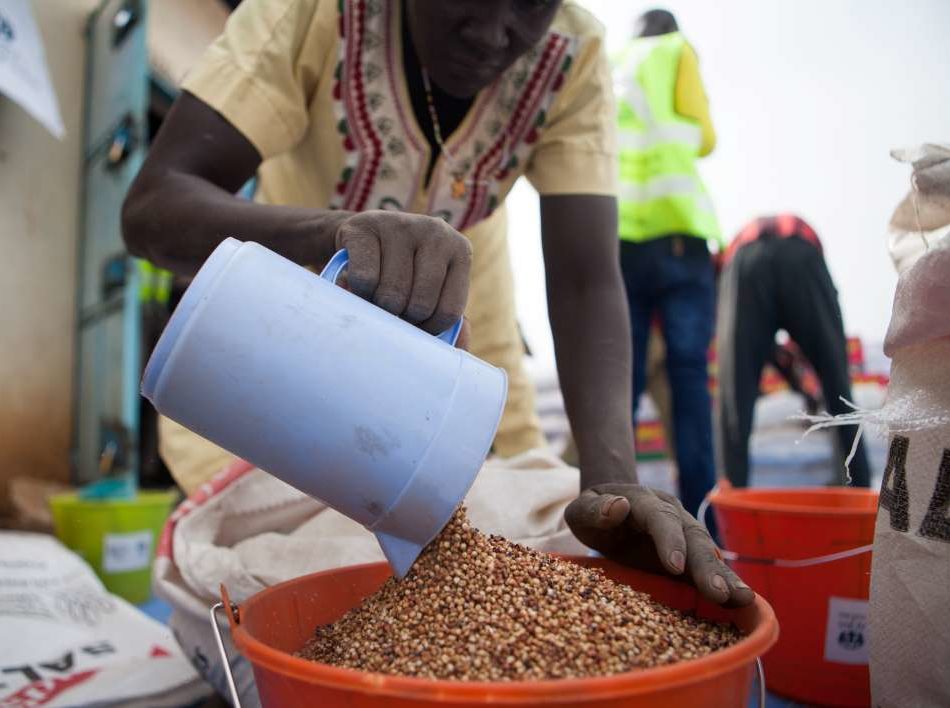
Gleaning – food recovery activities are important, especially in times of need; our world is smaller now, and we must deal with the co-existence of hunger and abundance, of neighbours far and near, and about how to manage our global harvest in a way that is just. This Levitical reference is an opportunity to talk about how decision-makers to work on comprehensive food policies that link how we manage food while protecting people vulnerable to hunger. Advocacy plays a role in how we handle these situations.
Foreigner – a lower class of persons distinct from “resident alien” (which would have had protection in the community, see Leviticus 23:22); policies around food and hunger have been around for a very long time – they need to be continually worked on in the interest of protecting vulnerable people.
Best clothes – Naomi is instructing Ruth to put on perfume, etc, and Ruth looks very passive here, when in fact Ruth is seen throughout as being resourceful and intuitively wise in her actions and words; “Best clothes can be a reference to how we need to be at our best when representing the interests of others with decision-makers.
The centrality of Ruth to the continuing story of the Jewish people, some who become followers of The Way (later called Christians) when they embrace Jesus as the Messiah, can be found in the New Testament in the first Chapter of the Gospel of Matthew. Ruth takes her place along with four other women including Jesus’ mother Mary in his genealogy. This is the only place in the gospels that names these women as important pieces in the puzzle of Jesus lineage.
Sources:
The Message, by Eugene Peterson;
The Oxford Bible Commentary (Ruth), by John Barton
Images from the Book of Ruth are from The Maciejowski Bible, 13th century, www.keesn.nl/mac/mac_en.htm
The New Oxford Annotated Bible. Michael, D. Coogan, editor. (New York: Oxford University Press, 2001) page 396.
Special thanks to the Rev. Elaine Strawbridge (The United Church of Canada, Florenceville-Bristol, NB) and to Rev. Marian Lucas-Jefferies (Anglican Church of Canada, NB) for their comments and suggestions.
Click here to download a printer friendly PDF
Genesis 1 & Mark 10:17-30
Reflection on Hunger by Walter Brueggemann
Back to the top